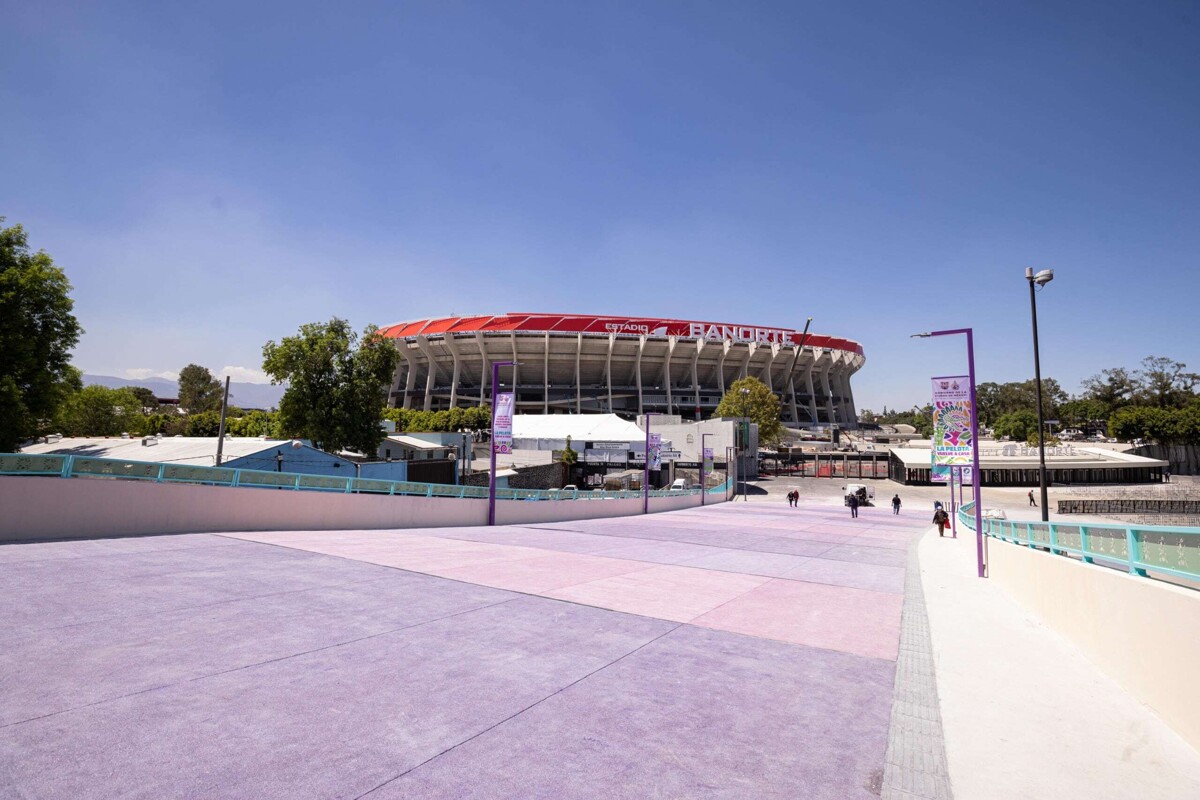
Head of Government Clara Brugada led the inauguration of the infrastructure package “Works that transform Huipulco and Santa Úrsula: The ball returns home,” aiming to improve mobility, public spaces, and urban services in the south of the capital heading towards the 2026 FIFA World Cup. During the event, the capital's head of state highlighted that these actions are part of the “Last Mile” strategy to ensure a better experience for visitors and residents around the Azteca Stadium, a historic venue for world cups and the next setting for the international tournament.
Key works: mobility, public space, and security
Among the main interventions stands out the comprehensive transformation of the CETRAM Huipulco, considered one of the most important transport nodes in the south of the city, with a daily influx of around 50,000 users. The Secretary of Mobility, Héctor Ulises, detailed that the station was modernized with new platforms, canopies, signage, lighting, tactile flooring system, and connections to different transport systems, including RTP, Metrobús, and the Light Rail. Likewise, the pedestrian bridge connecting to the stadium was rehabilitated, with structural reinforcement, elevator installation, lighting, and accessibility improvements.
For his part, the Secretary of Works, Raúl Basulto, reported that the actions included: repaving of 10 kilometers on Circuito Azteca, installation of more than 700 luminaries in the area, intervention of over 60 thousand square meters of asphalt paving, rehabilitation of vehicular and pedestrian bridges, improvements to public markets and community spaces, and the renovation of Parque Alegría Tecuiche. The total investment was approximately 200 million pesos.
Permanent works beyond the World Cup
Clara Brugada emphasized that, although the works were accelerated due to the World Cup, their impact will be permanent for the communities of Santa Úrsula, Huipulco, and neighboring colonies. “We received the World Cup as an accelerator of works, but they are projects that stay forever for the benefit of the population.”
Additionally, she highlighted the implementation of sustainable projects such as: installation of rainwater harvesting systems in more than 7,000 homes, rehabilitation of seven wells to improve water supply, construction of a rainwater harvesting system to mitigate floods, and a mobility plan for mass events.
Mobility plan for mass events
The authorities also announced a special mobility operation for the stadium's reopening and future World Cup matches. Among the measures are: vehicle restrictions on nearby roads, priority use of public transport, closure of the Azteca Stadium station of the Light Rail on event days, special routes and controlled access for residents. The CETRAM Huipulco will be a strategic point for the boarding and disembarking of users, while similar devices to those used in events like Formula 1 will be implemented.
Metropolitan coordination and urban legacy
The mayor of Coyoacán, Giovani Gutiérrez, highlighted the coordination between levels of government to consolidate works that not only respond to the sporting event but also improve the quality of life for residents. With these actions, the capital's government seeks to position Mexico City as the best host of the 2026 World Cup, with modern infrastructure, efficient mobility, and renewed public spaces that transcend the sporting event.